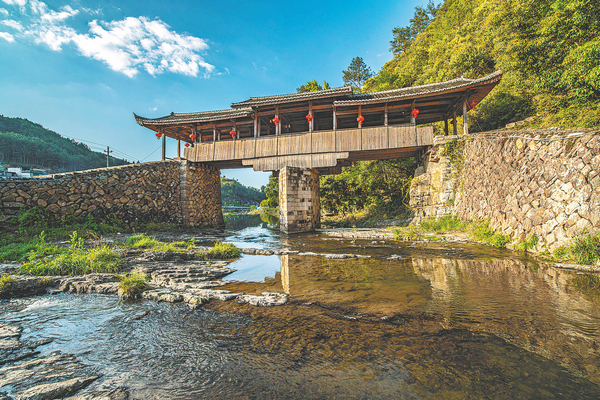
Traditional design and practices for building Chinese wooden arch bridges
Introduction
The traditional design and practices for building Chinese wooden arch bridges represent a significant aspect of China's rich cultural heritage. These bridges, predominantly located in the Fujian and Zhejiang provinces along China's southeast coast, embody a unique combination of architectural ingenuity, craftsmanship and environmental harmony.
It's inscribed on the Representative List of the Intangible Cultural Heritage of Humanity in December 2024.
Architectural Features
The traditional design and practices for building these bridges combine the use of wood, traditional architectural tools, craftsmanship, the core technologies of "beam-weaving" and mortise and tenon joints, and an experienced woodworker's understanding of different environments and the necessary structural mechanics.
The wooden arch bridges respond to the needs of local communities while taking into consideration the environment and the management of natural resources. They are a reflection of the value of harmonious coexistence between humans and nature.
Preservation and Conservation
The element was first inscribed on the List of Intangible Cultural Heritage in Need of Urgent Safeguarding in 2009 as the tradition had declined over the years due to rapid urbanization, scarcity of timber and lack of available construction space, all of which combine to threaten its transmission and survival.
Cultural Significance
Today, the element remains a source of livelihood for woodworkers, the bridges – and the traditional techniques and knowledge used to build them – are also an integral part of the cultural ecosystem of local villages. They serve as communication channels and cultural spaces, thus enhancing community harmony and cultural identity.
Local communities and woodworkers of all genders participate in the construction, maintenance and use of the bridges, as well as in the related folk practices. The associated skills, knowledge, history and culture have been integrated into formal education as valuable resources for local cultural development. This has helped to spread awareness of the practice among youth while promoting local traditions and living heritage in general.








